








In the morning, Catherine Wanjala would wake up and be heartbroken to see the little purple flowers in her maize field in western Kenya.
The beautiful little flowers were a bad omen; his field had been affected by witchweed, a parasitic plant that attaches to the roots of crops such as corn and sorghum, depriving them of nutrients.
“I felt like crying when I saw my plants shrivel and turn yellow,” Wanjala recalls, thinking about the period two years ago when this pest had created many problems and drastically reduced the family’s income.
Wanjala is certainly not the only farmer struggling with the witchweed curse. Across sub-Saharan Africa, the plant, known scientifically as striga hermonthica, causes an estimated $7 billion to $14 billion in damage a year, destroying crops and affecting the livelihoods of more than 100 million people.
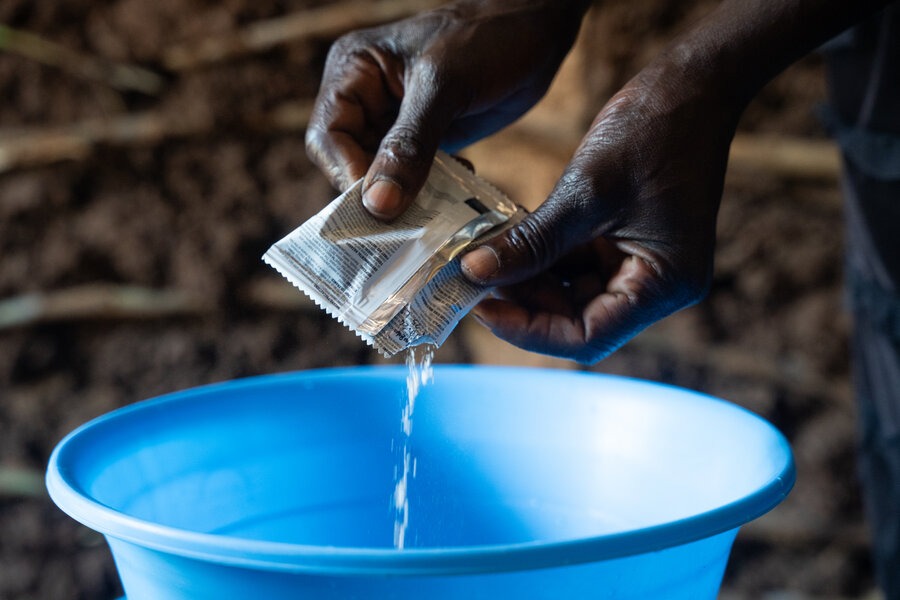
Now, however, thousands of people like Wanjala have taken matters into their own hands, thanks in part to an eco-friendly fungal bioherbicide that is taking hold in Kenya and soon elsewhere in East Africa, with the support of the World Food Program (WFP).
Produced by Kenyan social enterprise Toothpick, the bioherbicide uses locally sourced fungal spores and is one of the few commercialized bioherbicides in the world.
Unlike a chemical herbicide, the spores only attack witchweed and are unlikely to cause harm to other plants or humans, making the treatment safer and more effective.